Bruce P. Robinson, MD

Shingles causes a painful, blistering rash on your skin. If you get shingles, you may notice the following three stages:
Before the rash appears: For 1 to 2 days before the rash appears, you may have pain, itching, burning, or tingling on an area of skin where the rash will develop. Some people have described an “electrical sensation” on their skin before getting the rash.
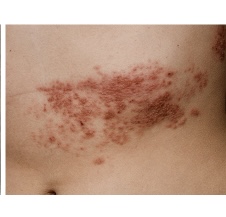
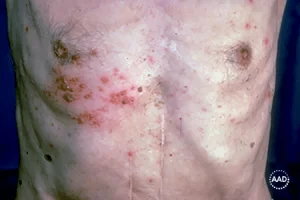
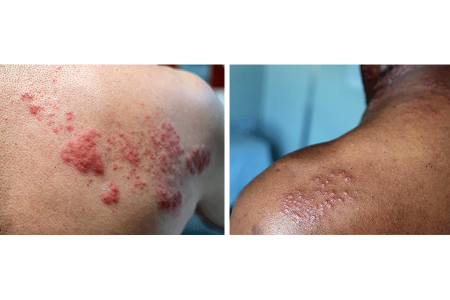
Rash appears: A painful, blistering rash appears or sometimes it can look like a group of hives. It usually appears on one side of your body, often on the torso; however, it can appear anywhere on your skin. Some people get more blisters after the rash appears, so it can seem that the rash is spreading.
Rash starts to clear: As the rash clears, the blisters may open, bleed, and scab over. For most people, the rash will clear within 2 to 4 weeks.
If you have a rash of blisters on your skin or a rash that looks like those shown below, schedule an appointment immediately for a diagnosis. If you have shingles, it’s important to get treatment, preferably within 1 to 3 days. If you’ve had the rash for longer than 2 to 3 days, it’s still important to schedule an appointment!
Along with a painful, blistering rash, some people can also have one or more of the following:
Rash: PLEASE call our office to schedule an appointment immediately or another health-care provider within 3 days of getting the rash. When treatment is started within 3 days, it can prevent possible complications, such as long-lasting nerve pain.
Receiving treatment after 3 days still has its benefits, you should still schedule an appointment!
Before starting treatment, a healthcare provider should confirm the diagnosis of shingles. If shingles is diagnosed, an antiviral medication - such as acyclovir, famciclovir, or valacyclovir, may be prescribed to:
Pain: Over-the-counter medication(s) can help, such as:
If you have severe pain, we may other prescribe a medication that reduces inflammation & provides additional comfort.
Talk with your dermatologist about getting the shingles vaccine, Shingrix. You can get shingles again. A shingles vaccine that the U.S. Food and Drug Administration (FDA) approved in 2017 can greatly reduce your risk of developing shingles again. You can learn more about this vaccine at, Shingles Vaccine, CDC.
The CDC recommends that adults 50 years and older get two doses of the shingles vaccine, Shingrix (recombinant zoster vaccine) to prevent shingles and the complications from the disease. Adults 19 years and older who have weakened immune systems because of disease or therapy should also get two doses of Shingrix, as they have a higher risk of getting shingles and related complications.
Until the shingles rash clears, you are contagious.
Anyone who has NOT had chickenpox (or the vaccine for chickenpox) can catch the virus. An active, untreated Shingles infection can cause chickenpox. Transmission usually happens through direct contact with the fluid from the rash blisters, not through casual contact or the air (unlike primary chickenpox). To avoid infecting others, who could get chickenpox dermatologists recommend that you do the following until the rash clears:
Shingles is caused by reactivation of the chickenpox virus already in your body and usually appears in a localized area. You cannot give someone else shingles, but the virus can spread through direct contact with the rash and cause chickenpox in someone who has never had it or hasn’t been vaccinated.
Pictures of a shingles rash
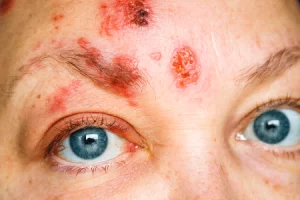
Having a shingles rash on your face is a medical emergency.
Even if the rash isn’t on your eye, it could still affect your eyesight. Immediately seeing a doctor for treatment could save your eyesight.